
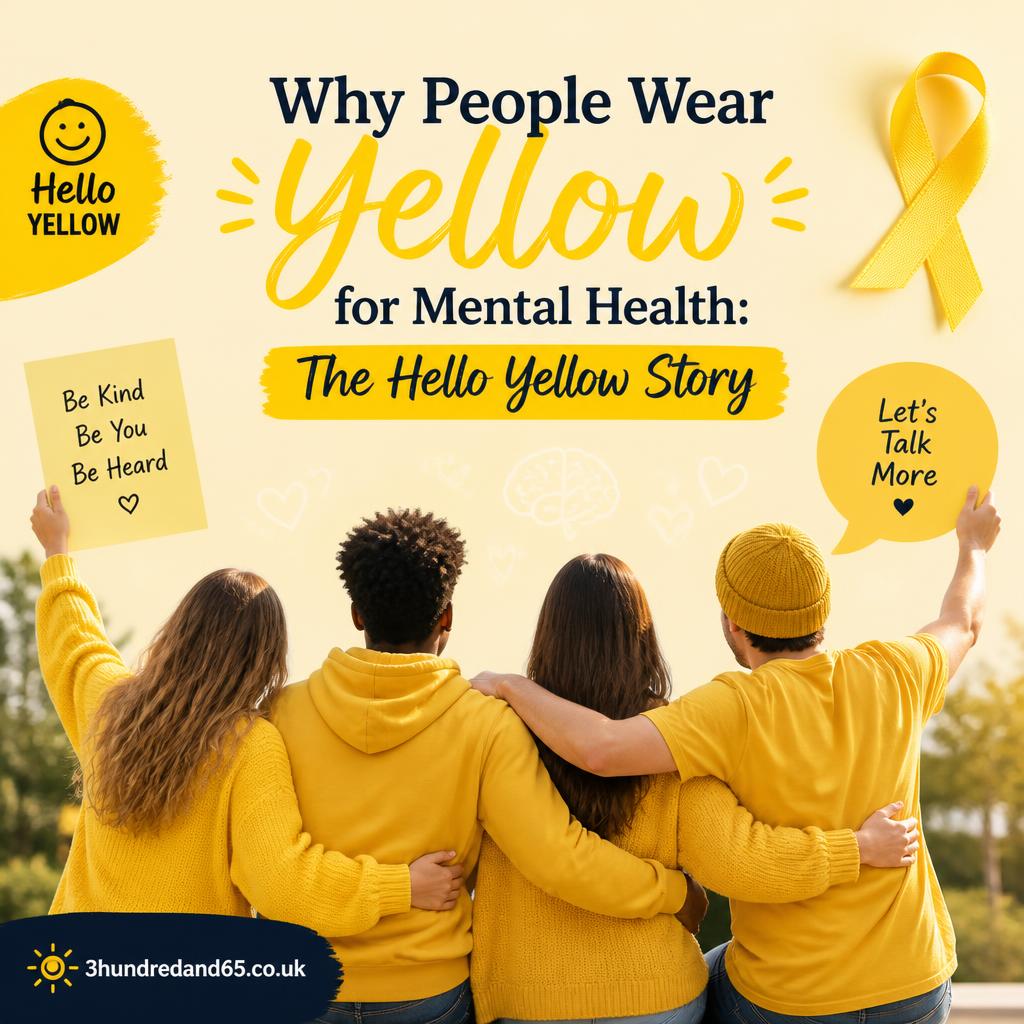
Why Do People Wear Yellow for Mental Health?
Every October, you’ll likely spot a lot more yellow around — in schools, offices, and on social media. People wear yellow for mental health as part of Hello Yellow, a campaign run by the UK youth mental health charity YoungMinds to mark World Mental Health Day. The idea is simple: put on something yellow, start a conversation, and raise funds so no young person feels alone with what they’re going through.
Yellow was chosen deliberately. It’s bright, upbeat, and impossible to miss, which is exactly the point. A single colour turns an individual, sometimes private struggle into something visibly shared. Wearing it becomes a small, public signal that you support young people’s mental health, without needing to say a word.
When Is Hello Yellow?
Hello Yellow is tied to World Mental Health Day, which falls on 10 October every year. When that date lands on a weekend, as it does in 2026, YoungMinds encourages people to take part on the nearest weekday instead, or on any date that suits their school or workplace calendar. Schools in particular are welcome to move the date around half-term or inset days.
The Story Behind the Campaign
YoungMinds launched Hello Yellow in 2016, and by 2026 it’s marking ten years of the campaign. In that time, it’s raised over £2.1 million and involved hundreds of thousands of participants across schools, workplaces, and communities. Recent years have also seen high-profile partnerships — including with retailers producing limited-edition yellow clothing collections, with profits going directly to YoungMinds.
What’s kept it running for a decade isn’t just the colour. It’s the message underneath: mental health struggles shouldn’t be something young people face in silence, and a visible, collective show of support genuinely helps normalise asking for help.
How to Take Part
You don’t need an elaborate plan to get involved. A few straightforward ways to join in:
- Wear something yellow — a t-shirt, tie, hair accessory, or even just yellow socks all count
- Sign up officially — YoungMinds’ website lets individuals, schools, and workplaces register and access free digital resources and fundraising materials
- Donate what you can — even small amounts add up across thousands of participants
- Start a conversation — use the day as a natural opening to check in with someone, particularly a young person, about how they’re really doing
- Run a small activity — schools and offices often organise things like a “find something yellow” hunt, bake sales, or an assembly using YoungMinds’ free slides
If Yellow Isn’t Your Thing
YoungMinds is explicit that wearing yellow isn’t compulsory to show support. Donating, sharing information, or simply having an open conversation with someone about their mental health all count just as much as the colour itself. The wardrobe choice is a memorable entry point, not a requirement.
World Mental Health Day Beyond Hello Yellow
Hello Yellow is the UK’s most visible youth-focused campaign tied to World Mental Health Day, but it’s not the only awareness date on the calendar. If you’re looking at the wider picture, our guides to Men’s Mental Health Awareness Month, Women’s Mental Health Month, and Children’s Mental Health Week cover the other major UK observances throughout the year.
Frequently Asked Questions
Is Hello Yellow only for schools?
No. Individuals, families, schools, and workplaces can all sign up and take part in whatever way suits them.
Do I have to donate money to take part?
No. Wearing yellow and starting conversations are just as valid as fundraising. Donations are welcomed but never required.
What charity does Hello Yellow support?
YoungMinds, a UK charity focused specifically on children and young people’s mental health.
Wearing yellow for mental health won’t fix anything on its own, but that was never really the point. It’s a bright, low-barrier way to say the quiet part out loud: that no one, especially not a young person, should have to face a hard time alone. For more on supporting mental health throughout the year, see our complete mental health guide.