
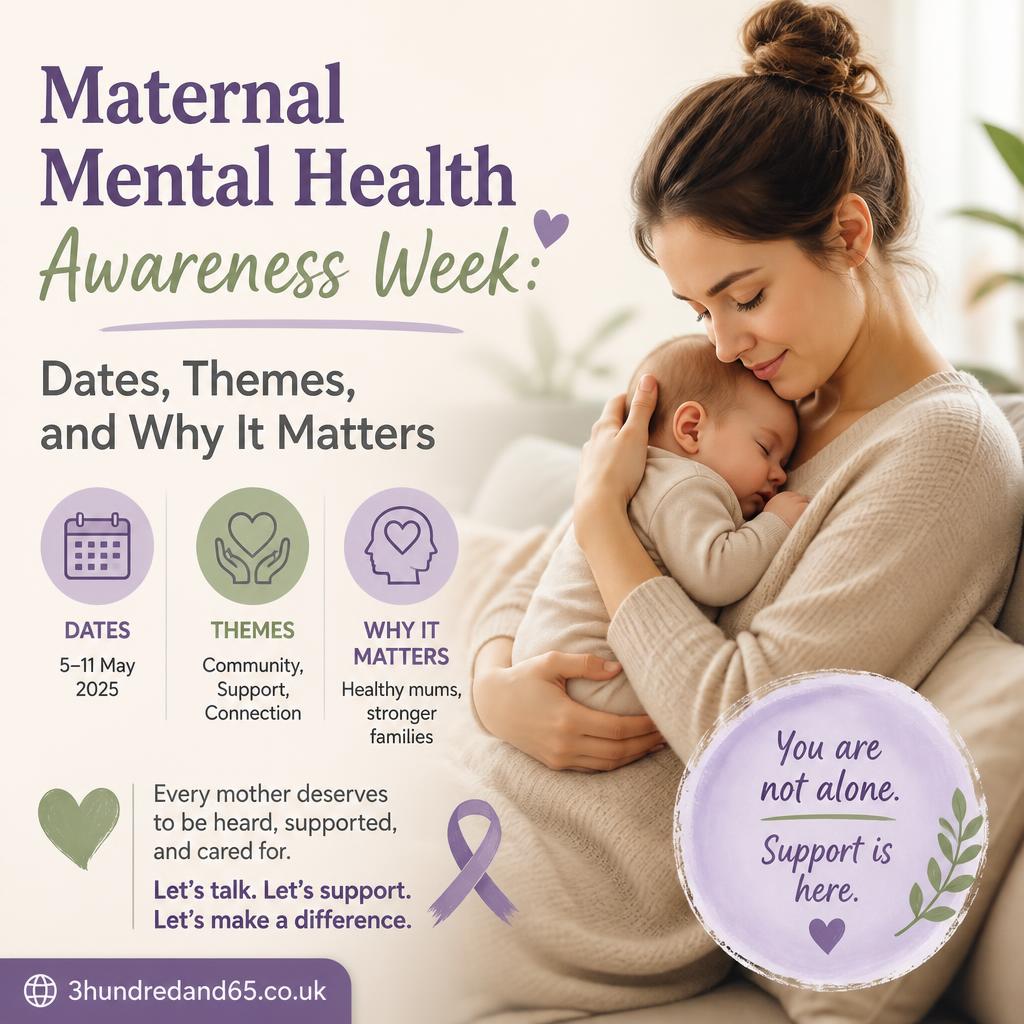
When Is Maternal Mental Health Awareness Week?
Maternal Mental Health Awareness Week runs from 4 to 10 May 2026 in the UK, organised by the Perinatal Mental Health Partnership (PMHP UK) alongside the Maternal Mental Health Alliance. World Maternal Mental Health Day falls in the middle of the week, on Wednesday 6 May. Since 2026 marks ten years of the campaign, this year’s theme is “A Decade of Voices,” reflecting on a decade of progress and the parents whose lived experience shaped it.
The week isn’t just a single message repeated for seven days. Organisers build a different daily focus, from the lived experience of parents to the specific challenges of loss and trauma, giving the week genuine depth rather than a single repeated slogan.
Why Maternal Mental Health Gets Its Own Week
The perinatal period, meaning pregnancy through the first two years after birth, brings a level of change that’s easy to underestimate until you’re living through it. Roughly one in five women experience mental health difficulties during this window, whether that’s antenatal anxiety, postnatal depression, or perinatal trauma following a difficult birth or loss.
Despite how common this is, many parents still hesitate to speak up. Recent surveys from campaign organisers found that a striking number of women don’t feel genuinely listened to when they do raise concerns about their mental health during this period. That gap between how common the struggle is and how comfortable people feel naming it is exactly what the week exists to close.
Recognising Perinatal Mental Health Difficulties
Struggles can look different from one parent to the next, but a few patterns come up consistently:
- Persistent low mood or tearfulness that doesn’t lift after a few days
- Intense anxiety, particularly around the baby’s safety or your own ability to cope
- Feeling disconnected from the baby, or guilt about not feeling the way you expected to
- Intrusive, distressing thoughts
- Difficulty sleeping even when the baby is settled
- Withdrawing from partners, friends, or family
None of these mean something has gone wrong with you as a parent. They’re recognised, common experiences with real, effective support available.
This Year’s Daily Themes
PMHP UK structures the week around a different focus each day, covering the full range of what maternal mental health actually involves:
- Voices of Experience — spotlighting parents’ own lived experience across the decade
- World Maternal Mental Health Day — joining the wider global conversation
- Voices of Care — the collaboration between families and professionals
- Voices of Change — advocacy and policy shifts driven by lived experience
- Voices of Loss and Healing — sensitive support around perinatal trauma, miscarriage, and baby loss
- Voices of the Future — looking ahead to the next generation of support
How to Get Involved
You don’t need to be a parent yourself to take part. A few accessible ways in:
- Share the campaign hashtag — #MaternalMHmatters on social media helps the conversation reach further
- Check in on a new or expecting parent — a genuine “how are you really doing?” often means more than it seems
- Signpost, don’t diagnose — if you’re worried about someone, gently pointing them toward their GP or midwife is more useful than trying to assess them yourself
- Workplaces can join in too — flagging parental leave policies, flexible return-to-work options, or simply raising awareness internally
Where to Find Support
- PANDAS Foundation — support specifically for perinatal mental illness
- Maternal Mental Health Alliance — maternalmentalhealthalliance.org, information and a perinatal mental health symptom checker
- Samaritans — 116 123, available 24/7
- Your GP or midwife — always a reasonable first step, and they see this constantly
Frequently Asked Questions
Is Maternal Mental Health Awareness Week the same as Women’s Mental Health Month?
No. Our Women’s Mental Health Month guide covers a broader May observance touching on women’s mental health generally. Maternal Mental Health Awareness Week, in the same month, focuses specifically on the perinatal period.
Who organises the UK’s Maternal Mental Health Awareness Week?
The Perinatal Mental Health Partnership (PMHP UK), in coordination with the Maternal Mental Health Alliance.
Does this only apply to mothers?
While the focus is primarily maternal, awareness of perinatal mental health increasingly includes partners and co-parents, who can experience similar struggles during this period too.
A decade in, Maternal Mental Health Awareness Week has moved the conversation forward, but the core message hasn’t changed: struggling during pregnancy or early parenthood isn’t a personal failing, and asking for help is exactly the right response. For the wider picture on UK mental health awareness dates, see our complete mental health guide.