
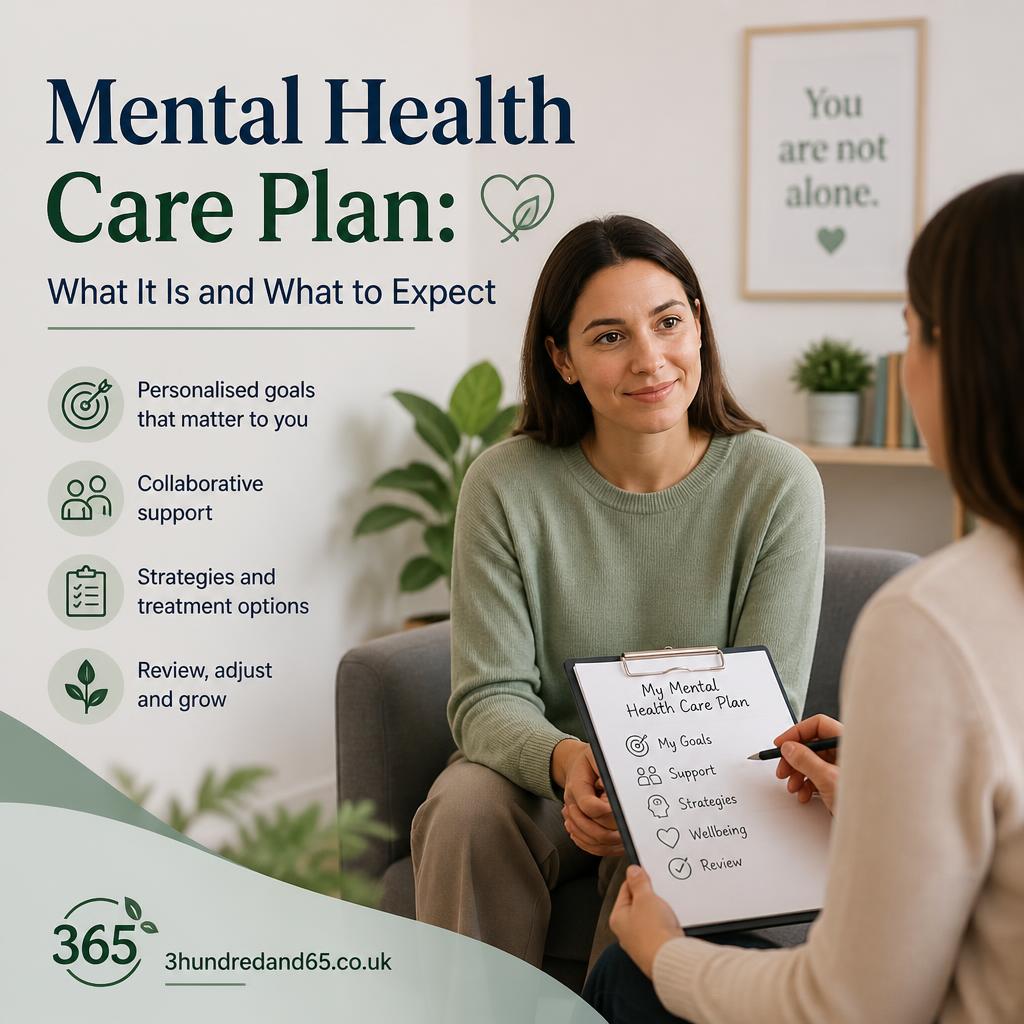
What Is a Mental Health Care Plan?
A mental health care plan is a written document, agreed between you and your mental health team, that sets out the support, treatment, and goals involved in your care. It’s not just a record of what’s wrong. A good care plan covers what helps you stay well, what to do if things start to slip, and who’s responsible for each part of your support.
In England, this typically sits within what’s called the Community Mental Health Framework, which replaced the older Care Programme Approach (CPA) for most people in 2021. CPA still applies in some settings, including prisons, but for most NHS mental health service users, the newer framework is now how care planning works.
Who Gets a Formal Care Plan?
Not everyone using NHS mental health services needs one. A formal, written care plan is typically put in place when your needs are more complex, for example if you’re working with more than one professional or service, or your care is expected to continue over a longer period. If your support is short-term and delivered by a single professional, a full care plan usually isn’t necessary.
What a Care Plan Typically Includes
Every care plan looks a little different, since it’s built around your specific needs, but most cover similar ground:
- Your mental health treatment — medication, talking therapies, or other interventions, and who’s providing them
- Physical health arrangements — since mental and physical health are closely linked, and often overlooked together
- Early warning signs — the specific signals that might mean you’re becoming unwell, and what to do if they appear
- A safety plan — how any risks to you or others are managed, agreed collaboratively rather than imposed
- Wider life goals — potentially including housing, employment, education, income, social connection, or family and parenting support
- Your care coordinator’s details — one named professional responsible for making sure everything stays joined up
The Role of a Care Coordinator
If you have a formal care plan, you’ll usually be assigned a care coordinator. This is a mental health professional, often a nurse, social worker, occupational therapist, or psychologist, who takes overall responsibility for making sure your care actually happens as planned, rather than getting lost between different services.
Your care coordinator should work with you directly to build the plan, not simply hand you a finished document. You’re entitled to a copy, and you should understand everything written in it.
What Happens at a Care Plan Review
Care plans aren’t fixed once and forgotten. Reviews typically happen at least every six months, or sooner if you, a family member, or a professional involved in your care requests one. At a review meeting:
- You, your care coordinator, and relevant professionals discuss how things have been going
- You can bring a family member, carer, or advocate if you’d like support in the room
- The plan gets updated based on what’s actually working and what isn’t
- You can pause the meeting or ask for a break if it becomes overwhelming
You’re entitled to have things explained clearly, and to say if something isn’t making sense. It’s your care plan, built around your life, not a document things happen to you through.
Involving Family and Carers
With your agreement, family members and carers can be involved in building and reviewing your care plan. Their perspective isn’t assumed to match yours automatically, and a good process considers their views separately, including how supporting you might be affecting their own wellbeing.
Frequently Asked Questions
Do I need a diagnosis to get a mental health care plan?
Not necessarily a formal diagnosis, but you generally need to be in contact with NHS mental health services and have needs complex enough to require coordinated support across more than one area.
Can I ask for a copy of my care plan?
Yes. You’re entitled to a written copy, and it should be explained to you in a way you actually understand, not handed over as a finished document with no discussion.
What if I disagree with something in my care plan?
Raise it with your care coordinator directly. Care plans are meant to be built collaboratively, and reviews exist specifically to adjust anything that isn’t working for you.
A mental health care plan works best when it feels like something built with you, not done to you. If you’re not sure whether you have one, or whether you should, your GP or existing mental health team is the right place to start that conversation. For more on related topics, see our complete mental health guide.